
Day after day
Mentoring happens online, inside real tools and real working environments

Chat channels
short questions and quick updates

Video sessions
live calls with shared screens
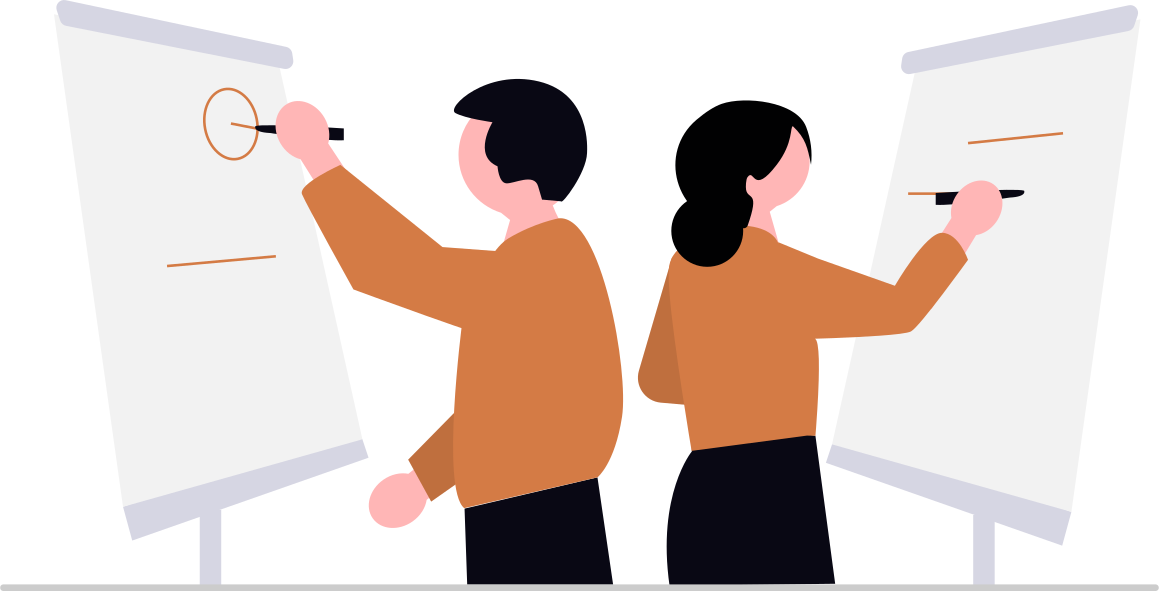
Shared whiteboard
sketch ideas and flows together


Version
control
track changes decisions and context

Production environments
practice where systems
actually run

Learning resources
curated notes literature and formats

Asynchronous thinking
work continues between sessions

Written reasoning
decisions captured not lost in calls

Why guidance matters today
AI can accelerate output, but it does not create understanding
Without a clear mental model, results are trusted without being questioned
Guidance focuses on reasoning before tools so decisions stay grounded, explainable, and defensible
What engineering really stands on
Engineering is not defined by tools, programming languages, or frameworks.
It is built on a body of formal knowledge that shapes how problems are understood, modeled, constrained, and solved.
Much of this foundation is invisible in day to day work, and often missing from modern learning paths.
Mentorship exists to make these invisible layers visible, and to rebuild what was never properly introduced.

Mathematics
structure,
abstraction,
precision

Logic
consistency, reasoning, validity
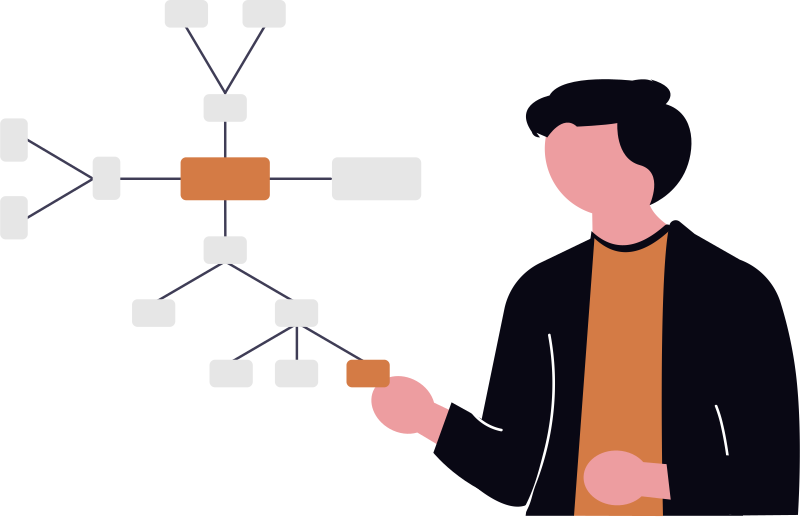
Discrete structures
graphs, relations, algorithms


Numerical methods
approximation, stability, error
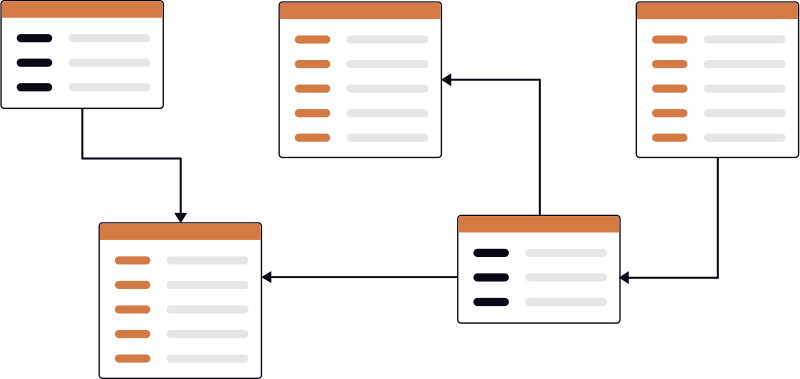
Systems
thinking
interaction, boundaries, trade offs

Research methodology
hypotheses, evidence, validation

Constraints & trade offs
limits, priorities, choices
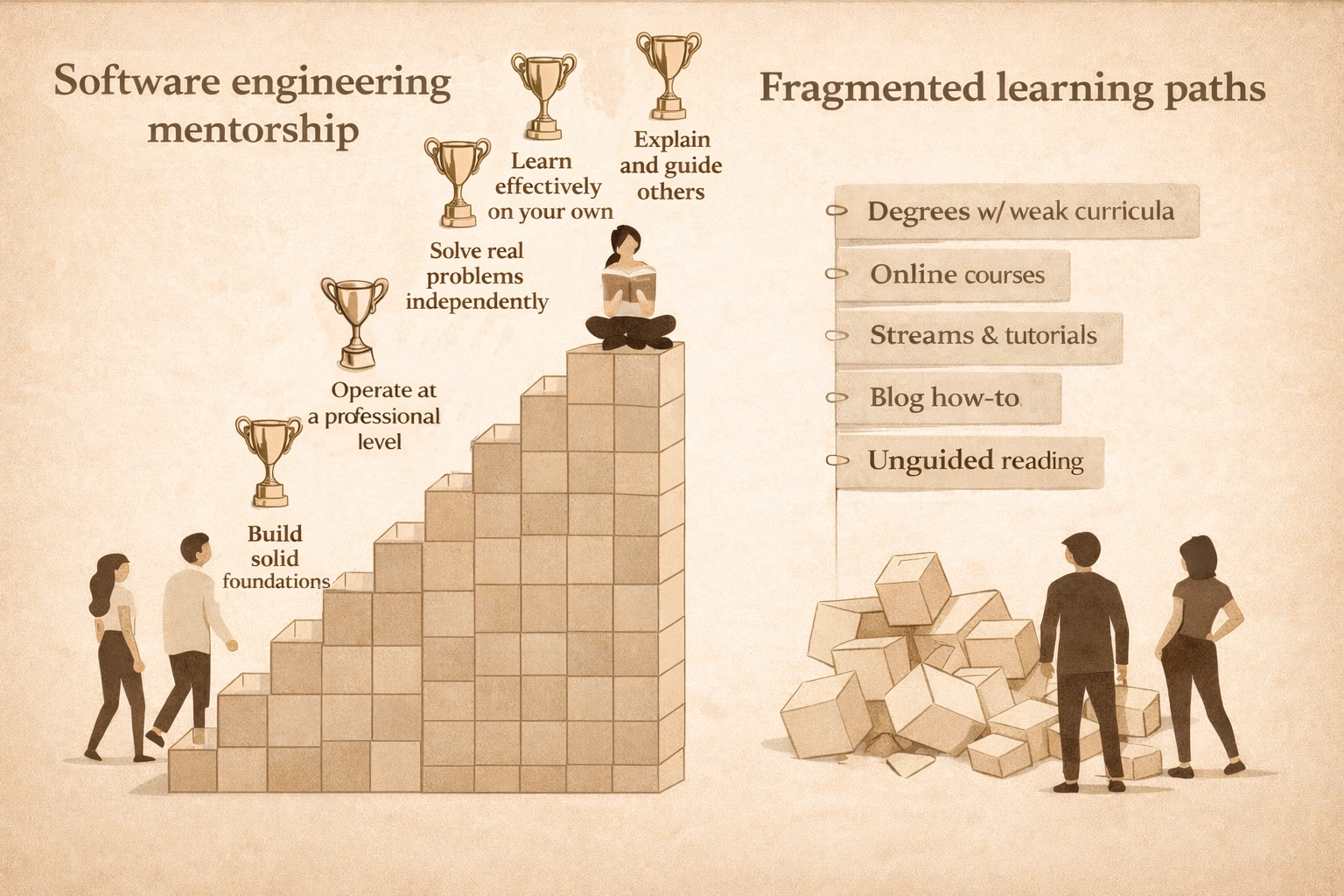
Structure is not the same as information
Many people are not stuck because they lack intelligence or mental effort. They are stuck because their fragmented learning.
Content accumulates, but without guidance, structure never forms.
Mentoring as a shared process
Mentoring is not instruction and not problem solving on behalf of the mentee. It is a shared process where both roles actively participate in understanding, reasoning, and decision making.
The mentor guides thinking and challenges assumptions. The mentee brings context, attempts, and responsibility for execution.
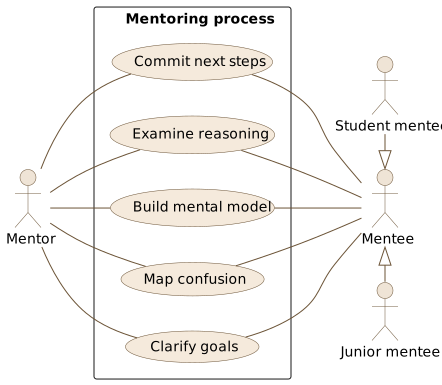
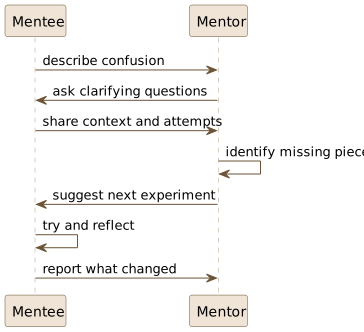
What happens during a mentoring session
Sessions are exploratory by design. The goal is not to reach an answer quickly, but to make reasoning visible and identify what actually needs to be understood next.
How mentor and mentee work together
Mentoring focuses on making decisions explicit. Understanding why something is done matters more than producing an artifact.
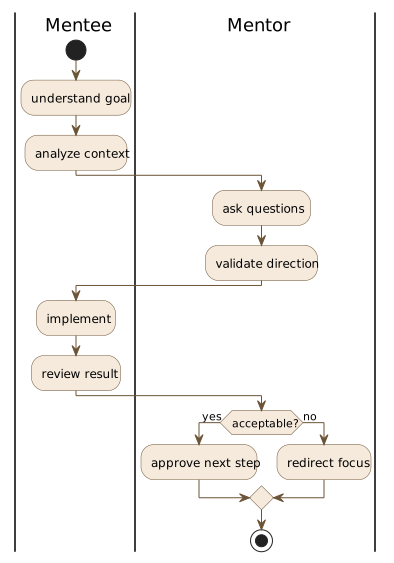
- Work starts from real constraints: people, time, systems, and trade offs.
- Questions and analysis expose assumptions before implementation.
- Tools, including AI, support thinking but never replace judgment.
Who this space welcomes
Early talent (by assessment): younger learners (≈11–15) with strong curiosity, basic digital familiarity, and the maturity to reason about problems, not just follow steps.
Pre university mentees (typically 16+): preparing for software engineering studies and building foundations before coursework begins.
University mentees: filling gaps in algorithms, data structures, and systems reasoning.
Early career mentees: strengthening design and architecture when systems start to matter.
How I approach learning software engineering
I stay with what feels unclear instead of moving past it. Understanding comes from identifying missing pieces and rebuilding ideas from simple building blocks.
This is not a branded method. It is how I work: plain language, reusable ideas, and one to one mentorship adapted to each person and context.
Common situations I help with
"I can build features, but I don’t really understand the system behind them"
"I follow tutorials, but I struggle to make design decisions on my own"
"I know tools and programming languages, but data flow and APIs still feel confusing"
"When something breaks, I don’t know where to start looking"
"University courses move fast, but skip how to reason about real systems"
"I get results, but I can’t clearly explain why they work"
Learning situations people bring to me
Figuring out what to learn next
Set clear priorities so learning stops feeling scattered and overwhelming.
Concepts that are almost there
Turn partially understood ideas into something you can actually rely on.
How the pieces fit together
See how data, APIs, and components connect in real world systems.
Coursework moving too fast
Slow things down and rebuild the steps that were skipped or rushed.
Building while learning
Ship small, meaningful pieces while fundamentals are still forming.
Getting tools out of the way
Set up editors, repos, and environments so tooling supports thinking instead of blocking it.
Choosing next steps
Decide what to practice next and how to demonstrate real progress at work.

How I think about learning software engineering
Most people struggle not from lack of intelligence, but from missing a clear mental model. I help build that model step by step so you understand why things work, not just how to type them.
The goal is to see cause and effect, connect ideas across tools, and remain steady when something breaks. Deliberate thinking matters more than tricks; once the model is clear, the code follows.
What this is (and what it is not)
How this work moves forward
Clarity builds over time. Guidance helps you notice blind spots, but it does not replace effort, reflection, or practice.
This work depends on shared expectations: showing your thinking, being explicit about what is unclear, and staying engaged between sessions.

When this kind of guidance tends to help
When you want to understand ideas, not just patch problems.
When you are open to questioning what you think you know and rebuilding it.
When you can describe where you get lost, even if it feels simple.
When you prefer a steady pace over hype or shortcuts.
When what you mainly need is tasks executed, this is not the right fit.
When pre university students, university students, or early career mentees are looking for steady, serious mentorship.